Showing posts with label Peter Swenson. Show all posts

August 22, 2014

The Ultra Thin Man Blog Tour: Guest Post


Welcome to my stop on the blog tour for The Ultra Thin Man by Peter Swenson! Today I have a great guest post written by the author to share with you - and don't forget to enter my giveaway to win a hardcover copy of your own! You can find the link to the giveaway in my right sidebar.


The Ultra Thin Man

Author: Peter Swenson
Genre: Science Fiction
Release Date: August 12, 2014
Publisher: Tor Books

Description:

In the twenty-second century, a future in which mortaline wire controls the weather on the settled planets and entire refugee camps drowse in drug-induced slumber, no one—alive or dead, human or alien—is quite what they seem. When terrorists manage to crash Coral, the moon, into its home planet of Ribon, forcing evacuation, it’s up to Dave Crowell and Alan Brindos, contract detectives for the Network Intelligence Organization, to solve a case of interplanetary consequences. Crowell’s and Brindos’s investigation plunges them neck-deep into a conspiracy much more dangerous than anything they could have imagined.

The two detectives soon find themselves separated, chasing opposite leads: Brindos has to hunt down the massive Helk alien Terl Plenko, shadow leader of the terrorist Movement of Worlds. Crowell, meanwhile, runs into something far more sinister—an elaborate frame job that puts our heroes on the hook for treason.

Crowell and Brindos are forced to fight through the intrigue to discover the depths of an interstellar conspiracy. And to answer the all-important question: Who, and what, is the Ultra Thin Man?
 

https://www.goodreads.com/book/show/18490517-the-ultra-thin-man?ac=1

The Fantasy of Science Fiction
By Patrick Swenson


The Ultra Thin Man is a science fiction story.

Or is it?

If you could travel back in time to an early hunter-gatherer culture and give the inhabitants MP3 players and ear buds and crank the tunes long and loud in their ears, they’d either gasp in awe and wonder, or run away in fear. Would they see the MP3 player as a technology, or would it be a fantasy? Would it be magic?

There’s a story by the late Henry Slesar called “Chief,” where white men have come to an isolated island after a great atomic war. They are men of science, and they tell the chief that the little box they have with them is simply a play thing of science. What it really is, though, is a Geiger counter. The Geiger counter shows that the tribe is not radioactive; the box doesn’t “click.” But when the scientists point the counter at themselves, it “clicks.” Oh boy, the chief is impressed, and he declares it “great magic.” Here’s proof that these white men are gods. And as is their custom, they eat their gods, so naturally, they skin and cook the scientists and serve them at their evening meal. They’re feeling dang good about themselves, too, because now? The tribespeople are gods too. The boxes have started clicking for them.

It’s a fabulous piece of science fiction, a strong commentary on the horrors of war and the fears of technology gone unchecked. From the point of view of the chief on the island, however, the white men’s science is nothing short of magic, something only afforded to gods. Arthur C. Clarke famously stated that any sufficiently advanced technology is indistinguishable from magic. Indeed, if you went forward in time 1000 years, you might have much the same reaction to that culture’s technological marvels as those hunter-gatherers did to your MP3 player.

One of my favorite writers is Ray Bradbury. I teach some short fiction from the loosely connected stories of The Martian Chronicles, and the book seems like science fiction, but it is mostly fantasy. When he wrote it, Bradbury understood there was no evidence of life on Mars. There were no canals. He wrote about the colonization of Mars, but he more or less fantasized about the existence of canals, looking instead at the power behind symbol and metaphor instead of latching on to any rigorous scientific extrapolations.

By definition, science fiction is any story that shows a possible or plausible change in technology or society. (To spell out one of many definitions.) It’s more about what’s possible, while fantasy is more about what’s impossible. When writing The Ultra Thin Man, I believed it fell, without a doubt, into the category of science fiction. It was a nod to the space opera and Golden Age pulp stories of my youth. Did I use science concepts in there? Yes. Was it believable science? Well, not always. (Sometimes you give a plausible explanation, and then hand wave the rest of it.) Remember that trip backwards in time? In reality, time travel is fantasy, because science hasn’t proven that time travel is even remotely possible. We’d have to crank up the volume and generate some super advanced technology (aka magic) to make it happen.

The margins between science fiction and fantasy blur even more when SF and fantasy team up. Consider Louise Marley’s The Singers of Nevya. The story reads as a pure fantasy world, but the specially trained Singers use psi power when they sing, thereby creating warmth on an ice planet. In the winters, the people need these singers to survive.

You could argue that the SF film Forbidden Planet is, to a degree, part fantasy. It’s even based on a fantasy, a retelling of Shakespeare’s The Tempest. It’s the 22nd century. There’s a space cruiser. There’s that famous robot, Robby. But then you’ve also got the “id monster.” Turns out the character named Morbius can’t control his subconscious, which is sending its Id monster out and killing people. Science? Well, no. Right now, we don’t have the ability to turn our fears into reality, which is probably a good thing.

The novel that had a huge impact on my love of science fiction (and on my own writing) was Dune. Some believe that its space opera underpinnings touch on the metaphysical. Maybe so. Dune goes the extra distance, though. Author Frank Herbert takes this SFnal universe and makes us understand that, in an almost fantastical way, the people populating it have life-or-death stakes in the outcome of the story.

Whether fantasy or science fiction, every good story blends what is possible and what is not. Sometimes it’s wrapped around a rip-roaring adventure. Sometimes it’s a thoughtful extrapolation of known science or pseudo-science. Sometimes it’s an exploration of the unknown—in outer space, or inner space.

The Ultra Thin Man is a science fiction story. Or is it? Like many speculative stories, it attempts to convince the reader to look beyond what is factual and consider the possibility that imagination does not always look like real life, regardless of the technology or the society in control of it. Sometimes it’s just great magic.

Thanks for stopping by and chatting with us today Patrick!
 
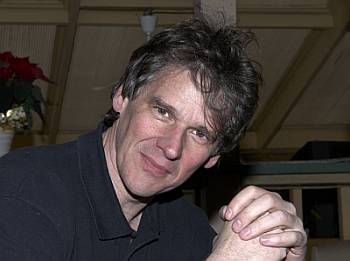
Patrick is a writer, publisher, editor, and teacher. His first novel is entitled The Ultra Thin Man, forthcoming from Tor in 2014. He has sold stories to the anthology Like Water for Quarks, and magazines such as Marion Zimmer Bradley’s Fantasy Magazine, Figment, and others. (Taken from Goodreads)

Author Links:
http://www.patrickswenson.net/
http://www.twitter.com/patrick_swenson
https://www.facebook.com/patrick.swenson.5


August 10, 2014

Spotlight + Giveaways: The Ultra Thin Man by Patrick Swenson & Echopraxia by Peter Watts


I'm really excited to be spotlighting two fantastic new releases from Tor Books today! Read on for more info on the books and then enter to win your own copies of each! I know that not everyone has the same taste, so I'm splitting up the giveaways instead of bundling them together. Feel free to enter one or both!


The Ultra Thin Man
Author: Patrick Swenson
Genre: Science Fiction

Release Date: August 12, 2014
Publisher: Tor Books

Description:


In the twenty-second century, a future in which mortaline wire controls the weather on the settled planets and entire refugee camps drowse in drug-induced slumber, no one—alive or dead, human or alien—is quite what they seem. When terrorists manage to crash Coral, the moon, into its home planet of Ribon, forcing evacuation, it’s up to Dave Crowell and Alan Brindos, contract detectives for the Network Intelligence Organization, to solve a case of interplanetary consequences. Crowell’s and Brindos’s investigation plunges them neck-deep into a conspiracy much more dangerous than anything they could have imagined.

The two detectives soon find themselves separated, chasing opposite leads: Brindos has to hunt down the massive Helk alien Terl Plenko, shadow leader of the terrorist Movement of Worlds. Crowell, meanwhile, runs into something far more sinister—an elaborate frame job that puts our heroes on the hook for treason.

Crowell and Brindos are forced to fight through the intrigue to discover the depths of an interstellar conspiracy. And to answer the all-important question: Who, and what, is the Ultra Thin Man? 


https://www.goodreads.com/book/show/18490517-the-ultra-thin-man?ac=1
Patrick is a writer, publisher, editor, and teacher. His first novel is entitled The Ultra Thin Man, forthcoming from Tor in 2014. He has sold stories to the anthology Like Water for Quarks, and magazines such as Marion Zimmer Bradley’s Fantasy Magazine, Figment, and others. (Taken from Goodreads)

Author Links:
http://www.patrickswenson.net/
http://patrickswenson.net/blog/
http://www.twitter.com/patrick_swenson
https://www.facebook.com/patrick.swenson.5
http://patrickswenson.net/feed/

Giveaway: (1) Hardcover copy of The Ultra Thin Man - Open to US/CAN only!


Echopraxia (Blindsight #2)
Author: Peter Watts
Genre: Science Fiction
Release Date: August 26, 2014
Publisher: Tor Books

Description:

Prepare for a different kind of singularity in this follow-up to the Hugo-nominated novel Blindsight

It's the eve of the twenty-second century: a world where the dearly departed send postcards back from Heaven and evangelicals make scientific breakthroughs by speaking in tongues; where genetically engineered vampires solve problems intractable to baseline humans and soldiers come with zombie switches that shut off self-awareness during combat. And it’s all under surveillance by an alien presence that refuses to show itself.

Daniel Bruks is a living fossil: a field biologist in a world where biology has turned computational, a cat's-paw used by terrorists to kill thousands. Taking refuge in the Oregon desert, he’s turned his back on a humanity that shatters into strange new subspecies with every heartbeat. But he awakens one night to find himself at the center of a storm that will turn all of history inside-out.

Now he’s trapped on a ship bound for the center of the solar system. To his left is a grief-stricken soldier, obsessed by whispered messages from a dead son. To his right is a pilot who hasn’t yet found the man she's sworn to kill on sight. A vampire and its entourage of zombie bodyguards lurk in the shadows behind. And dead ahead, a handful of rapture-stricken monks takes them all to a meeting with something they will only call “The Angels of the Asteroids.”

Their pilgrimage brings Dan Bruks, the fossil man, face-to-face with the biggest evolutionary breakpoint since the origin of thought itself.


https://www.goodreads.com/book/show/18490708-echopraxia?ac=1
Peter Watts is generally a lot more optimistic than you might expect, considering.

He has spent much of his adult life trying to decide whether to be a writer or a scientist, ending up as a marginal hybrid of both. He's won a handful of awards in fields as diverse as marine mammal science, video documentary, and science fiction. These accolades have not gone to his head since they never involved a lot of cash.

He spent ten years getting a bunch of degrees in the ecophysiology of marine mammals (how's that for unbridled optimism), and another ten trying make a living on those qualifications without becoming a whore for special-interest groups. This proved somewhat tougher that it looked; throughout the nineties he was paid by the animal welfare movement to defend marine mammals; by the US fishing industry to sell them out; and by the Canadian government to ignore them. He eventually decided that since he was fictionalising science anyway, he might as well add some characters and plot and try selling to a wider market than the Journal of Theoretical Biology.

His success has been, shall we say, mixed. His first novel, Starfish, netted a "Notable Book of the Year" nod from the New York Times, an honorable mention for John W. Campbell Memorial Award, and rejections from both German and Russian publishing houses on the grounds that it was "too dark". (Being considered too dark for the Russians remains one of Watts's proudest accomplishments, although he remains puzzled by the translation of his book into Italian.) This also marked the beginning of a diffuse cult following of angst-ridden blogging teenaged girls who identified with Starfish's central character.

Starfish was universally praised for its evocation of the deep-sea environment; the applause for its rendering of the surface world was somewhat more muted. The sequel, Maelstrom (2001, Tor), takes place almost entirely on land: it therefore avoids the elements that readers most loved about the first book, replacing them with a sprawling entropic dystopia in which Sylvia Plath might have felt at home, if Sylvia Plath had had a graduate degree in evolutionary biology. The critical response was generally as positive as it was for Starfish, which may come as a surprize to those who've noted a virtual absence of laudatory quotes on the paperback edition (someone fucked up in Production); both books received starred reviews from Booklist, and Maelstrom may mark the first time that the NY Times used the terms "exhilarating" and "deeply paranoid" to describe the same novel. Maelstrom's release did, however, mark the end of a diffuse cult following of angst-ridden blogging teenage girls who identified with Starfish's central character.

Behemoth, the concluding volume of what had inadvertently become the "Rifters Trilogy", was released by Tor Books in two volumes for industrial-policy reasons that Watts understands even though he still thinks they suck the one-eyed purple trouser eel. Even bisected, and notwithstanding a certain inevitable sense of been-there-done-that, Behemoth garnered a fair bit of critical praise (another NYT rave, starred review from Publisher's Weekly— just check out the damn blurbs page), although more squeamish reviewers grumbled that Watts had gone too far with this whole sexual sadism thing. Commercially, it tanked.

Watts' latest book, Blindsight (Tor 2006) might be best described as a literary first-contact novel exploring the nature and evolutionary significance of consciousness, with space vampires. Astonishingly, and against all expectations, it did not tank. In fact it survived rejection from half a dozen publishers, a miniscule initial print run, zero preorders from one of the continent's largest book retail chains, an absence of relevant blurbs on an otherwise questionable cover design, and a suicidal Hail-Mary act of desperation in which its author gave the whole thing away for free online under a Creative Commons license. As of this writing Blindsight is in its fourth hardcover printing, is being translated into several languages (including— at long last— German and Russian), and made the final ballot for the Hugo, John W. Campbell, Sunburst, Locus, and Aurora awards, winning exactly zero of them.

A collection of Watts's short fiction is available in obscure magazines and anthologies or bundled together into a thick pamphlet called Ten Monkeys, Ten Minutes, from Edge/Tesseract Books.

Feel free to send him e-mail. He's especially eager to hear from anyone who has less of a life than he does. (Taken from author's website)