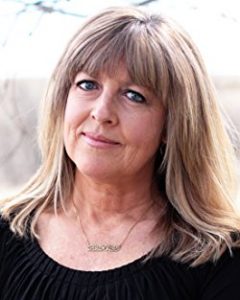
Author: Sarah McCraw Crow
Release Date: October 6, 2020
Publisher: MIRA Books
Genre: Literary Fiction/Coming of Age
978-0778310075; 0778310078
$27.99 USD
320 pages
A powerful exploration of what a woman can be when what she should be is no longer an option
In late 1970, Oliver Desmarais drops dead in his front yard while hanging Christmas lights. In the year that follows, his widow, Virginia, struggles to find her place on the campus of the elite New Hampshire men’s college where Oliver was a professor. While Virginia had always shared her husband’s prejudices against the four outspoken, never-married women on the faculty—dubbed the Gang of Four by their male counterparts—she now finds herself depending on them, even joining their work to bring the women’s movement to Clarendon College.
Soon, though, reports of violent protests across the country reach this sleepy New England town, stirring tensions between the fraternal establishment of Clarendon and those calling for change. As authorities attempt to tamp down “radical elements,” Virginia must decide whether she’s willing to put herself and her family at risk for a cause that had never felt like her own.
Told through alternating perspectives, The Wrong Kind of Woman is an engrossing story about finding the strength to forge new paths, beautifully woven against the rapid changes of the early ‘70s.
PRAISE:
“In her entrancing debut, McCraw Crow traces the impact of second-wave feminism and the antiwar movement in the early 1970s on a New Hampshire college campus.... The choice to present the characters’ desperate actions in shades of gray makes for engrossing reading.” —Publishers Weekly
“Sarah McCraw Crow's writing is layered with so much insight and compassion. A glorious debut filled with characters grasping to find a place to belong in a world on the edge of change.” —Carol Rifka Brunt, New York Times bestselling author of Tell the Wolves I’m Home
“The Wrong Kind of Woman is the right kind of book. A beautifully written exploration of loss, the novel captures its characters at the cusp of personal and social change. Sarah McCraw Crow deftly navigates the campus and national politics of the ’70s in a way that remains timely and pressing today. A powerful, thought-provoking debut.” —Amy Meyerson, Nationally bestselling author of The Bookshop of Yesterdays
“McCraw Crow brings to life the early days of the women's movement. The Wrong Kind of Woman is the story we need now: one which examines systemic sexism through not only a historical filter but via rich and authentic characters. Virginia's struggle echoes the struggle of so many women, throughout history.” —T. Greenwood, bestselling author of Keeping Lucy
“How could I not devour a book set in my favorite era? About family, marriage, love and grief and a country in the turbulent flux of change, The Wrong Kind of Woman limns the lives of a stunned widow, her daughter and a student as they all struggle to come to terms with death—and life—against the backdrop of the Vietnam war, Kent State, the drug culture, and the first heady rise of the women’s movement. Absolutely fabulous.” —Caroline Leavitt, New York Times bestselling author of Pictures of You and Cruel Beautiful World
“A professor’s death wrenches his wife and daughter into a new world as they join women fighting for equality in the early seventies, a time when elite education is cracking open by those knocking down single-gender barriers. The Wrong Kind of Woman explores the strength women found to stop papering over the glaring flaws in the world and live with eyes wide open with grace and honesty.” —Randy Susan Meyers, author of Waisted
“With equal parts shrewdness, wisdom, and warmth, Sarah McCraw Crow’s debut novel brings a canny eye to a forever lively moment in U.S. history. Like Marilyn French and Erica Jong before her, Crow lets her cast of characters speak to and for its readers about their mom’s, their dad’s, and their own enactment of the 1970's wave of what once was, still is, and will surely again be called The Women’s Movement. Graceful, solid, and beautifully rendered, The Wrong Kind of Woman is exactly the right kind of book for all of us.” —Abby Frucht, author of Maids

Chapter One
November 1970 Westfield, New Hampshire
OLIVER DIED THE SUNDAY after Thanksgiving, the air heavy with snow that hadn’t fallen yet. His last words to Virginia were “Tacks, Ginny? Do we have any tacks?”
That morning at breakfast, their daughter, Rebecca, had complained about her eggs—runny and gross, she said. Also, the whole neighborhood already had their Christmas lights up, and why didn’t they ever have outside lights? Virginia tuned her out; at thirteen, Rebecca had reached the age of comparison, noticing where her classmates’ families went on vacation, what kinds of cars they drove. But Oliver agreed about the lights, and after eating his own breakfast and Rebecca’s rejected eggs, he drove off to the hardware store to buy heavy-duty Christmas lights.
Back at home, Oliver called Virginia out onto the front porch, where he and Rebecca had looped strings of colored lights around the handrails on either side of the steps. Virginia waved at their neighbor Gerda across the street— on her own front porch, Gerda knelt next to a pile of balsam branches, arranging them into two planters—as Rebecca and Oliver described their lighting scheme. Rebecca’s cheeks had gone ruddy in the New Hampshire cold, as Oliver’s had; Rebecca had his red-gold hair too.
“Up one side and down the other,” Rebecca said. “Like they do at Molly’s house—”
“Tacks, Ginny? Do we have any tacks?” Oliver interrupted. In no time, he’d lost patience with this project, judging by the familiar set of his jaw, the frown lines corrugating his forehead.
A few minutes later, box of nails and hammer in hand, Virginia saw Oliver’s booted feet splayed out on the walk, those old work boots he’d bought on their honeymoon in Germany a lifetime ago. “Do you have to lie down like that to—” she began, while Rebecca squeezed out from between the porch and the overgrown rhododendron.
“Dad?” Rebecca’s voice pitched upward. “Daddy!”
Virginia slowly took in that Oliver was lying half on the lawn, half on the brick walk, one hand clutching the end of a light string. Had he fallen? It made no sense, him just lying there on the ground like that, and she hurtled down the porch steps. Oliver’s eyes had rolled back so only the whites showed. But he’d just asked for tacks, and she hadn’t had time to ask if nails would work instead. She crouched, put her mouth to his and tried to breathe for him. Something was happening, yes, maybe now he would turn out to be just resting, and in a minute he’d sit up and laugh with disbelief.
Next to her, Rebecca shook Oliver’s shoulder, pounded on it. “Dad! You fainted! Wake up—”
“Go call the operator,” Virginia said. “Tell them we need an ambulance, tell them it’s an emergency, a heart attack, Becca! Run!” Rebecca ran.
Virginia put her ear to Oliver’s chest, listening. A flurry of movement: Gerda was suddenly at her side, kneeling, and Eileen from next door, then Rebecca, gasping or maybe sobbing. Virginia felt herself being pulled out of the way as the ambulance backed into the driveway and the two para- medics bent close. They too breathed for Oliver, pressed on his chest while counting, then lifted him gently onto the backboard and up into the ambulance.
She didn’t notice that she was holding Rebecca’s hand on her one side and Eileen’s hand on the other, and that Gerda had slung a protective arm around Rebecca. She barely noticed when Eileen bundled her and Rebecca into the car without a coat or purse. She didn’t notice the snow that had started to fall, first snow of the season. Later, that absence of snow came back to her, when the image of Oliver lying on the bare ground, uncushioned even by snow, wouldn’t leave her.
Aneurysm. A ruptured aneurysm, a balloon that had burst, sending a wave of blood into Oliver’s brain. A subarachnoid hemorrhage. She said all those new words about a thousand times, along with more familiar words: bleed and blood and brain. Rips and tears. One in a million. Sitting at the kitchen table, Rebecca next to her and the coiled phone cord stretched taut around both of them, Virginia called one disbelieving person after another, repeated all those words to her mother, her sister Marnie, Oliver’s brother, Oliver’s department chair, the people in her address book, the people in his.
At President Weissman’s house five days later, Virginia kept hold of Rebecca. Rebecca had stayed close, sleeping in the middle of Virginia and Oliver’s bed as if she were little and sleepwalking again, her shruggy new adolescent self forgotten. They’d turned into a sudden team of two, each one circling, like moons, around the other.
Oliver’s department chair had talked Virginia into a reception at President Weissman’s house, a campus funeral. In the house’s central hall, Virginia’s mother clutched at her arm, murmuring about the lovely Christmas decorations, those balsam garlands and that enormous twinkling tree, and how they never got the fragrant balsam trees in Norfolk, did they, only the Fraser firs—
“Let’s go look at the Christmas tree, Grandmomma.” Rebecca took her grandmother’s hand as they moved away. What a grown-up thing to do, Virginia thought, glad for the release from Momma and her chatter.
“Wine?” Virginia’s sister Marnie said, folding her hand around a glass. Virginia nodded and took a sip. Marnie stayed next to her as one person and another came close to say something complimentary about Oliver, what a wonderful teacher he’d been and a great young historian, an influential member of the Clarendon community. And his clarinet, what would they do without Oliver’s tremendous clarinet playing? The church service had been lovely, hadn’t it? He sure would have loved that jazz trio.
She heard herself answering normally, as if this one small thing had gone wrong, except now she found herself in a tunnel, everyone else echoing and far away. Out of a clutch of Clarendon boys, identical in their khakis and blue blazers, their too-long hair curling behind their ears, one stepped forward. Sam, a student in her tiny fall seminar, the Italian Baroque.
“I—I just wanted to say…” Sam faltered. “But he was a great teacher, and even more in the band—” The student- faculty jazz band, he meant.
“Thank you, Sam,” she said. “I appreciate that.” She watched him retreat to his group. Someone had arranged for Sam and a couple of other Clarendon boys to play during the reception, and she hadn’t noticed until now.
“How ’bout we sit, hon.” Marnie steered her to a couch. “I’m going to check on Becca and Momma and June—” the oldest of Virginia’s two sisters “—and then I’ll be right back.”
“Right.” Virginia half listened to the conversation around her, people in little clumps with their sherries and whiskeys. Mainframe, new era, she heard. Then well, but Nixon, and a few problems with the vets on campus. She picked up President Weissman’s voice, reminiscing about the vets on campus after the war thirty years ago. “Changed the place for the better, I think,” President Weissman said. “A seriousness of purpose.” And she could hear Louise Walsh arguing with someone about the teach-in that should have happened last spring.
Maybe Oliver would appreciate being treated like a dignitary. Maybe he’d be pleased at the turnout, all the faculty and students who’d shown up at the Congregational Church at lunchtime on a Friday. Probably he wished he could put Louise in her place about the teach-in. Virginia needed to find Rebecca, and she needed to make sure Momma hadn’t collapsed out of holiday party–funeral confusion. But now Louise Walsh loomed over her in a shape- less black suit, and she stood up again to shake Louise’s hand. “I just want to say how sorry I am,” Louise said. “I truly admired his teaching and—everything else. We’re all going to miss him.”
“Thank you, Louise.” Virginia considered returning the compliment, to say that Oliver had admired Louise too. Louise had tenure, the only woman in the history department, the only woman at Clarendon, to be tenured. Lou- ise had been a thorn in Oliver’s side, the person Oliver had complained about the most. Louise was one of the four women on faculty at Clarendon; the Gang of Four, Oliver and the others had called them.
Outside the long windows, a handful of college boys tossed a football on a fraternity lawn across the street, one skidding in the snow as he caught the ball. Someone had spray-painted wobbly blue peace signs on the frat’s white clapboard wall, probably after Kent State. But the Clarendon boys were rarely political; they were athletic: in their baggy wool trousers, they ran, skied, hiked, went gliding off the college’s ski jump, human rockets on long skis. They built a tremendous bonfire on the Clarendon green in the fall, enormous snow sculptures in the winter. They stumbled home drunk, singing. Their limbs seemed loosely attached to their bodies. Oliver had once been one of those boys.
“Come on, pay attention,” Marnie said, and she propelled Virginia toward President Weissman, who took Virginia’s hands.
“I cannot begin to express all my sympathy and sad- ness.” President Weissman’s eyes were magnified behind his glasses. “Our firmament has lost a star.” He kissed her on the cheek, pulling a handkerchief from his jacket pocket, so she could wipe her eyes and nose again.
At the reception, Aunt June kept asking Rebecca if she was doing okay, and did she need anything, and Aunt Marnie kept telling Aunt June to quit bothering Rebecca. Mom looked nothing like her sisters: Aunt Marnie was bulky with short pale hair, Aunt June was petite, her hair almost black, and Mom was in between. Rebecca used to love her aunts’ Tidewater accents, and the way Mom’s old accent would return around her sisters, her vowels stretching out and her voice going up and down the way Aunt June’s and Aunt Marnie’s voices did. Rebecca and Dad liked to tease Mom about her accent, and Mom would say I don’t know what you’re talking about, I don’t sound anything like June. Or Marnie. But especially not June.
Nothing Rebecca thought made any sense. She couldn’t think about something that she and Dad liked, or didn’t like, or laughed about, because there was no more Dad. Aunt Marnie had helped her finish the Christmas lights, sort of, not the design she and Dad had shared, but just wrapped around the porch bannisters. It looked a little crazy, actually. Mom hadn’t noticed.
“Here’s some cider, honey,” Aunt June said. “How about some cheese and crackers? You need to eat.”
“I’m okay,” Rebecca said. “Thanks,” she remembered to add.
“Have you ever tried surfing?” Aunt June asked. “The boys—” Rebecca’s cousins “—love to surf. They’ll teach you.” “Okay.” Rebecca wanted to say that it was December and there was snow on the ground, so there was no rea- son to talk about surfing. Instead she said that she’d bodysurfed with her cousins at Virginia Beach plenty of times, but she’d never gotten on a surfboard. As far as she could tell, only boys ever went surfing, and the waves at Virginia Beach were never like the waves on Hawaii Five-0. Mostly the boys just sat on their surfboards gazing out at the hazy- white horizon, and at the coal ships and aircraft carriers chugging toward Norfolk.
“You’ll get your chance this summer—I’ll bet you’ll be a natural,” Aunt June said.
Things would keep happening. Winter would happen. There would be more snow, and skiing at the Ski Bowl. The town pond would open for skating and hockey. The snow would melt and it would be spring and summer again. They’d go to Norfolk for a couple of weeks after school let out and Mom would complain about everything down there, and get into a fight with Aunt June, and they’d all go to the beach, and Dad would get the most sunburned, his ears and the tops of his feet burned pink and peely…
“Let’s just step outside into the fresh air for a minute, sweetheart,” Aunt June said, and Rebecca stood up and followed her aunt to the room with all the coats, one hand over her mouth to hold in the latest sob, even after she and Mom had agreed they were all cried out and others would be crying today, but the two of them were all done with crying. She knew that the fresh air wouldn’t help anything.
Excerpted from The Wrong Kind of Woman by Sarah McCraw Crow © 2020 by Sarah McCraw Crow, used with permission by MIRA Books/HarperCollins.
 |
 Sarah McCraw Crow grew up in Virginia but has lived most of her adult life in New Hampshire. Her short fiction has run in Calyx, Crab Orchard Review, Good Housekeeping, So to Speak, Waccamaw, and Stanford Alumni Magazine. She is a graduate of Dartmouth College and Stanford University, and is finishing an MFA degree at Vermont College of Fine Arts. When she's not reading or writing, she's probably gardening or snowshoeing (depending on the weather).
Social Links:
Author Website: https://sarahmccrawcrow.com/
Twitter: https://twitter.com/sarahmcrow?lang=en
Instagram: https://www.instagram.com/sarahmccrawcrow/
Goodreads: https://www.goodreads.com/author/show/15502401.Sarah_McCraw_Crow
Buy Links:
Amazon: https://www.amazon.com/Wrong-Kind-Woman-Novel/dp/0778310078
Barnes & Noble: https://www.barnesandnoble.com/w/the-wrong-kind-of-woman-sarah-mccraw-crow/1134767509?ean=9780778310075
IndieBound: https://www.indiebound.org/book/9780778310075
Books-A-Million: https://www.booksamillion.com/p/Wrong-Kind-Woman/Sarah-McCraw-Crow/9780778310075?id=7941582454467
Google Play: https://play.google.com/store/books/details/Sarah_McCraw_Crow_The_Wrong_Kind_of_Woman?id=pbe8DwAAQBAJ