Showing posts with label crime fiction. Show all posts

June 27, 2023

Preston Noir Blog Tour: Excerpt + Giveaway

I am thrilled to be hosting a spot on the PRESTON NOIR by Sean O'Leary Blog Tour hosted by Rockstar Book Tours. Check out my post and make sure to enter the giveaway!
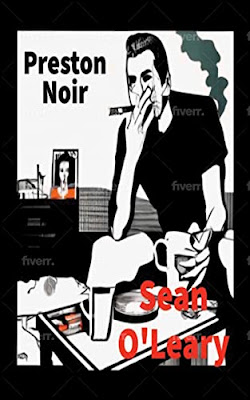
 

PRESTON NOIR
Author: Sean O'Leary
Release Date: June 10, 2023
Publisher: Sean O'Leary
Formats: Paperback, eBook
Pages: 204

Find it: Goodreadshttps://books2read.com/PRESTON-NOIR

Read for FREE with a Kindle Unlimited membership!

Preston Noir follows Private Investigator Rufus Warhol as he tries to find a missing teenage girl while attempting to balance the consequences of having an unpaid debt to a local crime boss, a drug-dealing brother, and a drug-addicted sister.

This is a page-turning, fast-moving crime novel in the style of Peter Corris or Peter Temple’s Jack Irish thrillers.

The deadline for the unpaid debt sets the cracking pace as Rufus tries to navigate through all his problems and get some clean air. His sister is causing him problems and his ex-girlfriend is sick of lending him money. His brother is done with him and all Rufus really wants to do is get wasted and go see Died Pretty at the Croxton Park Hotel.

But he and his brother put their differences aside when their sister is used as a pawn to get the debt paid. They race furiously against time to find her and put an end to all their problems once and for all.

Chapter One

Rufus Warhol opens his beautiful blue, now bloodshot eyes. Lifts his head gently off the pillow and sighs softly. His breathing is slightly laboured. Head lifts higher and his back comes with it but he falls back down smiling. Not yet. He tries again, succeeds. Pushes his back against the wall, sits up straight. Reaches for his cigarettes on top of the chest-of-drawers, the red lighter. Puts the ciggie in his mouth, lights it. Blows smoke straight ahead.

He reaches for the mirror, steadily brings it onto his lap. Finds a twenty note on the same chest-of-drawers. Rolls it up, sticks it up to his nose, lifts the mirror and snorts, not a line, but randomly across the mirror hitting his target at will. He jerks back and drops the whole operation, lighted ciggie too, onto his lap. Jumps up holding his cock.

‘Nearly burnt my fucken dick,’ he says snorting laughter while stomping the cigarette into the parquetry floor.

He gets off the bed, pulls on a pair of black Levi’s, sans underwear, walks into the kitchen, turns the kettle on. Goes to the fridge and gets the milk. Reaches into the cupboard for his bag of ganja and rollie papers. Sits down at the Formica table, covered in used coffee mugs, a saucer used as an ashtray, a crumpled-up piece of paper, Sunday’s form guide from the Herald-Sun and a Coles brochure he brought in from the letterbox.

Gets back up, goes into the bedroom to grab his ciggies and lighter. Mixes the ganja with a cigarette and rolls it up and lights it. Takes a huge toke on the joint and his eyes roll back a bit in his head, ‘fuck’. He gets up and turns the kettle off. The mighty Rufus. Unstoppable. Puts three lumped teaspoons of coffee in a small mug, pours the hot water and adds just a dob of milk, one sugar. He had a Nespresso machine but it fucked up and he can’t afford a new one until some new cases roll in. He sits down and takes another toke on the joint. That piece of paper, the reason for the early morning snort, to prepare. He reaches for it, unfolds it. Jersey McManus 11 am Preston Society.

Fucken Scottish cunt.

***

A few suburbs away in Brunswick, Nic Warhol looks at his body in the full-length mirror in his bedroom. He wears white Tommy Hilfiger boxer shorts. Admires his long, strong, lithe athletic torso. He’s a marathoner, not a sprinter. He’ll kick your arse slowly, make it hurt. He does his stretches. Basic stuff for his core. He’s old-fashioned. He does squats with his back flat against the bedroom wall. He does fifty, slowly, so it hurts, so it’s good for him. He stops. Does another fifty. Does some breathing exercises with his hand held across his chest, inhaling deeply then counting out, one and two and three and four while exhaling, his chest rising and falling. His breathing is now under control. He puts on a black silk dressing gown and walks down the hall to the kitchen. Reaches for Weet-bix and bran and puts them in a bowl. Goes to the fridge and removes a carton of skim milk, pours it over the cereal. Goes to the cupboard, takes out a packet of green tea. Turns on the kettle and eats his cereal while waiting for the kettle to boil.

His mobile rests on the wooden kitchen table, it starts to vibrate and he checks the caller ID. Jersey McManus. He ignores it. His girlfriend Ly walks into the kitchen straight from the shower, her long, straight black hair, shining wet, a towel around her, she reaches around Nic’s chest, drops her head in front of him, her wet hair falling across his face, the towel drops away as she kisses him wetly on the mouth.

***

Rufus walks back into his bedroom, goes to the corner of the room and picks up his cheap K-Mart stick vacuum and vacuums up the cigarette he crushed out earlier. He hasn’t had a good high paying client for a while. Jersey keeps him in ganja and speed and, on rare occasions, some H on a kind of retainer for his services as a private investigator but even that’s running thin. He lives alone in a one-bedroom apartment above Back to the Futon on High Street, Preston South. They’re good digs. Good not great. He’s barely making the monthly rent. Living not far from where he grew up on Cooma Street.

Rufus gets in the shower and wishes he could get some straightforward infidelity cases but these days any dickwad with a mobile can do it. Rufus has a great rep for being discreet but he also sometimes ends up fucking the client. Women like him. He is tall and raffish, a wiry, muscular, strong body. He had fought as an amateur boxer and turned pro but quit because his girlfriend at the time couldn’t stand it. His father said his straight right hand was a thing of beauty. Rufus is preppy looking, floppy light brown hair, killer smile. Everyone likes him on first greeting, it’s what happens after that that sets him apart. He disappoints people, lets them down, gradually.

He gets out of the shower, dresses in blue jeans, white t-shirt under a dark blue cotton shirt with a brown suede jacket. Puts on black suede shoes. Walks down the stairs from his apartment and onto High Street. He starts walking north.

Everything is changing he thinks as he looks around, they’re going to gentrify his old suburb of Preston. He can feel the hipsters and young families coming. There’s already a barber with a hipster beard working out of a container on High Street, Preston South. He walks across High Street where they’re building a huge apartment complex. He can almost feel the food trucks idling behind him, waiting to cross Bell Street into Preston. He wonders what they’ll think of the two-dollar shops, cheap bakeries, Cash Converters and the market.

Rufus knows Preston. He knows every café, every cheap Vietnamese restaurant, the Asian nail joints with the girls wearing their little masks, the beautiful, shiny black girls in the African hair extension place, the eyebrow threading place, the town hall with names of the war dead chipped into the concrete memorial, the library, yes, the two-dollar shops and the smell of hot bread from the warm bakeries. The protection money paid over steaming bowls of Pho. The gambling dens at the back of cafés and other small businesses. The massage places and the ones which give their male customers a happy ending. He knows the markets where his father had a stall for half-a-century. The Aboriginal legal service. The job networks. The paint warehouses, the buildings and shops that constantly change tenants. Tobacconists, chemists.

The shutdown curtain factory. All of it. The private schools that somehow seem out of place. All of it. He goes into the tobacconist and buys a pack of Peter Jackson 20’s. He buys these cheaper cigarettes because they still give you the hit at the back of your throat when you draw in the smoke.

High Street narrows when you cross Bell Street, it somehow becomes darker, something unspoken, something unknown, something perhaps criminal lies beneath the surface. Rufus, the private investigator looking at all the angles. The drifter; the grifter. Walks into Preston Society.

Jersey sits at a table for two on the right-hand-side. There are a few occupied tables further back in the dark. A guy reading the paper on a stool at the front of the shop while occasionally looking at the street life through the window. The tall blonde girl smiles willingly at Rufus and he smiles back and says,

‘Get me a latte, strong. Thanks, babe’

Jersey with a black and white cloth cap on his head. Andy Cap Rufus thinks, remembering the old English cartoon about the drunk little man that his father likes. Jersey always wears a hat of some description, hates the fact he went bald. He has a black leather jacket on over a black shirt, both expensive looking and shiny. Rufus pulls out a chair opposite him, says,

‘Jersey.’

‘Rufus.’

‘Why the need to speak to me?’

‘Your brother owes me forty large.’

‘Oh, shit, Jersey, not that ridiculous cheap criminal talk. He owes you forty-thousand-dollars, forty grand. Large, what the fuck is that?’

Rufus smiles broadly.

‘I lent him, one year ago, forty grand, to get him started in his little entrepreneurial business.’

‘His drug dealing, yes. He paid you back in less than two months and he set it up with Madam Phan behind him too.’

‘I want my commission.’

‘Wasn’t part of the deal from what I…’

‘Forget what you heard. He owes me forty grand and I want you to get it or I call in your marker plus the forty grand.’

‘Jersey, I work for you as an investigator, that’s why you supply me my er, my goods, my…’

‘It’s over Rufus. You haven’t done anything useful for me for a while now. I want you to become useful again.’

‘You must know he hates my guts. My brother and I we…’

‘Family Rufus, the things we do for our family.’

‘And if I say no.’

‘You know. I don’t have to spell it out. There’ll be some violence and then you’ll work for me, dealing or wiping down tables or something else until you pay it all back. I’ve been running a tab on you for years. I know what you owe me, right down to the last little line of speed, the last joint you smoked in that dump you live in.’

‘I worked for you, gave you information and…’

‘Useless information. Truth is you haven’t done anything useful for me for a long time. You’re not so shmick anymore, Rufus. The fancy jeans and shirts and jackets, they’re fraying at the edges, the soles of your shoes are wearing thin. The famous constitution not holding up like it used to. Getting the cold sweats for the first time in your life. Hangovers, previously unheard of. Time to pay up, son.’

‘Can’t do it. Won’t do it.’

‘You’ve got fifteen days. The forty grand your brother owes me plus twenty-grand you owe me. Fifteen days Rufus or I act, boyo.’

Rufus stands up pushing the chair back and leans down into Jersey’s face, says,

‘You fucken Scottish…’

Jersey raises his hand in the air. Two big men, dressed identically in black puffy jackets, stand up and begin walking from the dark at the rear of the café. Rufus sits down. Jersey waves the hand. The men return to their seats.

‘Forty thousand in fifteen days,’ Rufus says.

‘Your brother, with the help of that Vietnamese goddess, Madam Phan, has turned into a major player. He’s got the money, you just have to get it.’

Rufus pushes the chair back, the waitress brings his latte, he says,

‘Sorry babe, won’t be needing it. This gentleman will pay. Won’t you Jersey.’

Jersey squints his eyes, tightens his mouth but Rufus turns and walks out.

Sean O’Leary has published five short story collections, My Town, Walking, Wonderland, Tokyo Jazz and Other Stories and This is Not a Love Song. His novella Drifting was the winner of the ‘Great Novella Search 2016’ and was published in September 2017. He has published over forty short stories in literary and crime fiction journals. His crime novella The Heat, set in Darwin and Bangkok was published in August 2019. His interviews with crime writers appear online in Crime Time magazine. His crime novel Going All the Way is out now and his crime series featuring Indigenous investigator, Carter Thompson includes, City of Sin and City of Fear. The third book, City of Vice drops in late 2023.

He has worked in a variety of jobs including motel receptionist, rubbish removalist/tree lopper, farm hand and night manager in various hotels in Sydney’s notorious, Kings Cross. He has lived all over the bloody place but now resides in Melbourne, thinks that test cricket is the greatest game of all and supports Melbourne Football Club (a life sentence). He writes like a demon, loves travelling, is mad about photography, does some AI art and tries to walk everywhere.

Website | Twitter | FacebookInstagram | Goodreads | Amazon | BookBub

(2) winners will receive a finished copy of PRESTON NOIR - International.

Ends July 11th, midnight EST.


Tour Schedule:

Week One:

6/26/2023

#BRVL Book Review Virginia Lee Blog

Excerpt

6/26/2023

The Momma Spot

Excerpt

6/27/2023

A Dream Within A Dream

Excerpt

6/28/2023

Two Chicks on Books

Excerpt/IG Post

6/28/2023

@jaimerockstarbooktours

IG Post

6/29/2023

Cara North

Excerpt/IG Post

6/30/2023

Books and Zebras

IG Review

6/30/2023

Sadie's Spotlight

Excerpt/IG Post

Week Two:

7/3/2023

Country Mamas With Kids

Review/IG Post

7/4/2023

Fire and Ice

Review/IG Post

7/5/2023

Nerdophiles

Review

7/6/2023

Rajiv's Reviews

Review/IG Post

7/5/2023

Brandi Danielle Davis

IG Review/TikTok Post

7/6/2023

A Blue Box Full of Books

IG Review/TikTok Post

7/7/2023

@allyluvsbooksalatte

IG Review/TikTok Post


April 19, 2020

Dirty Old Town Blog Tour: Excerpt + Giveaway

Dirty Old Town by Gabriel Valjan Banner
Tour March 1 - April 30, 2020

Dirty Old Town by Gabriel ValjanDirty Old Town (A Shane Cleary Mystery)
Author: Gabriel Valjan
Genre: Crime Fiction/Mystery/Procedural/Historical Fiction
Publication Date: January 14, 2020
Publisher: Level Best Books
Number of Pages: 162

Synopsis:

"Robert B. Parker would stand and cheer, and George V. Higgins would join the ovation. This is a terrific book--tough, smart, spare, and authentic. Gabriel Valjan is a true talent--impressive and skilled--providing knock-out prose, a fine-tuned sense of place and sleekly wry style."-- Hank Phillippi Ryan, nationally bestselling author of The Murder List


Shane Cleary, a PI in a city where the cops want him dead, is tough, honest and broke. When he's asked to look into a case of blackmail, the money is too good for him to refuse, even though the client is a snake and his wife is the woman who stomped on Shane's heart years before. When a fellow vet and Boston cop with a secret asks Shane to find a missing person, the paying gig and the favor for a friend lead Shane to an arsonist, mobsters, a shady sports agent, and Boston's deadliest hitman, the Barbarian. With both criminals and cops out to get him, the pressure is on for Shane to put all the pieces together before time runs out.

The phone rang. Not that I heard it at first, but Delilah, who was lying next to me, kicked me in the ribs. Good thing she did because a call, no matter what the hour, meant business, and my cat had a better sense of finances than I did. Rent was overdue on the apartment, and we were living out of my office in downtown Boston to avoid my landlord in the South End. The phone trilled.
Again, and again, it rang.
I staggered through the darkness to the desk and picked up the receiver. Out of spite I didn’t say a word. I’d let the caller who’d ruined my sleep start the conversation.
“Mr. Shane Cleary?” a gruff voice asked.
“Maybe.”
The obnoxious noise in my ear indicated the phone had been handed to someone else. The crusty voice was playing operator for the real boss.
“Shane, old pal. It’s BB.”
Dread as ancient as the schoolyard blues spread through me. Those familiar initials also made me think of monogrammed towels and cufflinks. I checked the clock.
“Brayton Braddock. Remember me?”
“It’s two in the morning, Bray. What do you want?”
Calling him Bray was intended as a jab, to remind him his name was one syllable away from the sound of a jackass. BB was what he’d called himself when we were kids, because he thought it was cool. It wasn’t. He thought it made him one of the guys. It didn’t, but that didn’t stop him. Money creates delusions. Old money guarantees them.
“I need your help.”
“At this hour?”
“Don’t be like that.”
“What’s this about, Bray?”
Delilah meowed at my feet and did figure eights around my legs. My gal was telling me I was dealing with a snake, and she preferred I didn’t take the assignment, no matter how much it paid us. But how could I not listen to Brayton Braddock III? I needed the money. Delilah and I were both on a first-name basis with Charlie the Tuna, given the number of cans of Starkist around the office. Anyone who told you poverty was noble is a damn fool.
“I’d rather talk about this in person, Shane.”
I fumbled for pen and paper.
“When and where?”
“Beacon Hill. My driver is on his way.”
“But—”
I heard the click. I could’ve walked from my office to the Hill. I turned on the desk light and answered the worried eyes and mew. “Looks like we both might have some high-end kibble in our future, Dee.”
She understood what I’d said. Her body bumped the side of my leg. She issued plaintive yelps of disapproval. The one opinion I wanted, from the female I trusted most, and she couldn’t speak human.
I scraped my face smooth with a tired razor and threw on a clean dress shirt, blue, and slacks, dark and pressed. I might be poor, but my mother and then the military had taught me dignity and decency at all times. I dressed conservatively, never hip or loud. Another thing the Army taught me was not to stand out. Be the gray man in any group. It wasn’t like Braddock and his milieu understood contemporary fashion, widespread collars, leisure suits, or platform shoes.
I choose not to wear a tie, just to offend his Brahmin sensibilities. Beacon Hill was where the Elites, the Movers and Shakers in Boston lived, as far back to the days of John Winthrop. At this hour, I expected Braddock in nothing less than bespoke Parisian couture. I gave thought as to whether I should carry or not. I had enemies, and a .38 snub-nose under my left armpit was both insurance and deodorant.
Not knowing how long I’d be gone, I fortified Delilah with the canned stuff. She kept time better than any of the Bruins referees and there was always a present outside the penalty box when I ran overtime with her meals. I meted out extra portions of tuna and the last of the dry food for her.
I checked the window. A sleek Continental slid into place across the street. I admired the chauffeur’s skill at mooring the leviathan. He flashed the headlights to announce his arrival. Impressed that he knew that I knew he was there, I said goodbye, locked and deadbolted the door for the walk down to Washington Street and the car.
Outside the air, severe and cold as the city’s forefathers, slapped my cheeks numb. Stupid me had forgotten gloves. My fingers were almost blue. Good thing the car was yards away, idling, the exhaust rising behind it. I cupped my hands and blew hot air into them and crossed the street. I wouldn’t dignify poor planning on my part with a sprint.
Minimal traffic. Not a word from him or me during the ride. Boston goes to sleep at 12:30 a.m. Public transit does its last call at that hour. Checkered hacks scavenge the streets for fares in the small hours before sunrise. The other side of the city comes alive then, before the rest of the town awakes, before whatever time Mr. Coffee hits the filter and grounds. While men and women who slept until an alarm clock sprung them forward into another day, another repeat of their daily routine, the sitcom of their lives, all for the hallelujah of a paycheck, another set of people moved, with their ties yanked down, shirts and skirts unbuttoned, and tails pulled up and out. The night life, the good life was on. The distinguished set in search of young flesh migrated to the Chess Room on the corner of Tremont and Boylston Streets, and a certain crowd shifted down to the Playland on Essex, where drag queens, truck drivers, and curious college boys mixed more than drinks.
The car was warmer than my office and the radio dialed to stultifying mood music. Light from one of the streetlamps revealed a business card on the seat next to me. I reviewed it: Braddock’s card, the usual details on the front, a phone number in ink. A man’s handwriting on the back when I turned it over. I pocketed it.
All I saw in front of me from my angle in the backseat was a five-cornered hat, not unlike a policeman’s cover, and a pair of black gloves on the wheel. On the occasion of a turn, I was given a profile. No matinee idol there and yet his face looked as familiar as the character actor whose name escapes you. I’d say he was mid-thirties, about my height, which is a liar’s hair under six-foot, and the spread of his shoulders hinted at a hundred-eighty pounds, which made me feel self-conscious and underfed because I’m a hundred-sixty in shoes.
He eased the car to a halt, pushed a button, and the bolt on my door shot upright. Job or no job, I never believed any man was another man’s servant. I thanked him and I watched the head nod.
Outside on the pavement, the cold air knifed my lungs. A light turned on. The glow invited me to consider the flight of stairs with no railing. Even in their architecture, Boston’s aristocracy reminded everyone that any form of ascent needed assistance.
A woman took my winter coat, and a butler said hello. I recognized his voice from the phone. He led and I followed. Wide shoulders and height were apparently in vogue because Braddock had chosen the best from the catalog for driver and butler. I knew the etiquette that came with class distinction. I would not be announced, but merely allowed to slip in.
Logs in the fireplace crackled. Orange and red hues flickered against all the walls. Cozy and intimate for him, a room in hell for me. Braddock waited there, in his armchair, Hefner smoking jacket on. I hadn’t seen the man in almost ten years, but I’ll give credit where it’s due. His parents had done their bit after my mother’s death before foster care swallowed me up. Not so much as a birthday or Christmas card from them or their son since then, and now their prince was calling on me.
Not yet thirty, Braddock manifested a decadence that came with wealth. A pronounced belly, round as a teapot, and when he stood up, I confronted an anemic face, thin lips, and a receding hairline. Middle-age, around the corner for him, suggested a bad toupee and a nubile mistress, if he didn’t have one already. He approached me and did a boxer’s bob and weave. I sparred when I was younger. The things people remembered about you always surprised me. Stuck in the past, and yet Braddock had enough presence of mind to know my occupation and drop the proverbial dime to call me.
“Still got that devastating left hook?” he asked.
“I might.”
“I appreciate your coming on short notice.” He indicated a chair, but I declined. “I have a situation,” he said. He pointed to a decanter of brandy. “Like some…Henri IV Heritage, aged in oak for a century.”
He headed for the small bar to pour me some of his precious Heritage. His drink sat on a small table next to his chair. The decanter waited for him on a liquor caddy with a glass counter and a rotary phone. I reacquainted myself with the room and décor.
I had forgotten how high the ceilings were in these brownstones. The only warm thing in the room was the fire. The heating bill here alone would’ve surpassed the mortgage payment my parents used to pay on our place. The marble, white as it was, was sepulchral. Two nude caryatids for the columns in the fireplace had their eyes closed. The Axminster carpet underfoot, likely an heirloom from one of Cromwell’s cohorts in the family tree, displayed a graphic hunting scene.
I took one look at the decanter, saw all the studded diamonds, and knew Elizabeth Taylor and Richard Burton would have done the set number of paces with a pair of hand-wrought dueling pistols to own it. Bray handed me a snifter of brandy and resumed his place in his chair. I placed my drink on the mantel. “Tell me more about this situation you have.”
“Quite simple, really. Someone in my company is blackmailing me.”
“And which company is that?”
“Immaterial at the moment. Please do take a seat.”
I declined his attempt at schmooze. This wasn’t social. This was business.
“If you know who it is,” I said, “and you want something done about it, I’d recommend the chauffeur without reservation, or is it that you’re not a hundred percent sure?”
I approached Bray and leaned down to talk right into his face. I did it out of spite. One of the lessons I’d learned is that the wealthy are an eccentric and paranoid crowd. Intimacy and germs rank high on their list of phobias.
“I’m confident I’ve got the right man.” Brayton swallowed some of his expensive liquor.
“Then go to the police and set up a sting.”
“I’d like to have you handle the matter for me.”
“I’m not muscle, Brayton. Let’s be clear about that. You mean to say a man of your position doesn’t have any friends on the force to do your dirty work?”
“Like you have any friends there?”
I threw a hand onto each of the armrests and stared into his eyes. Any talk about the case that bounced me off the police force and into the poorhouse soured my disposition. I wanted the worm to squirm.
“Watch it, Bray. Old bones ought to stay buried. I can walk right out that door.”
“That was uncalled for, and I’m sorry,” he said. “This is a clean job.”
Unexpected. The man apologized for the foul. I had thought the word “apology” had been crossed out in his family dictionary. I backed off and let him breathe and savor his brandy.
I needed the job. The money. I didn’t trust Bray as a kid, nor the man the society pages said saved New England with his business deals and largesse.
“Let’s talk about this blackmail then,” I said. “Think one of your employees isn’t happy with their Christmas bonus?”
He bolted upright from his armchair. “I treat my people well.”
Sensitive, I thought and went to say something else, when I heard a sound behind me, and then I smelled her perfume. Jasmine, chased with the sweet burn of bourbon. I closed my eyes, and when I opened them I saw his smug face.
“You remember Cat, don’t you?”
“How could I not?” I said and kissed the back of the hand offered to me. Cat always took matters one step forward. She kissed me on the cheek, close enough that I could feel her against me. She withdrew and her scent stuck to me. Cat was the kind of woman who did all the teaching and you were grateful for the lessons. Here we were, all these years later, the three of us in one room, in the middle of the night.
“Still enjoy those film noir movies?” she asked.
“Every chance I get.”
“I’m glad you came at my husband’s request.”
The word husband hurt. I had read about their marriage in the paper.
“I think you should leave, dear, and let the men talk,” her beloved said.
His choice of words amused me as much as it did her, from the look she gave me. I never would have called her “dear” in public or close quarters. You don’t dismiss her, either.
“Oh please,” she told her husband. “My sensibility isn’t that delicate and it’s not like I haven’t heard business discussed. Shane understands confidentiality and discretion. You also forget a wife can’t be forced to testify against her husband. Is this yours, Shane?” she asked about the snifter on the brandy on the mantel. I nodded. “I’ll keep it warm for you.”
She leaned against the mantel for warmth. She nosed the brandy and closed her eyes. When they opened, her lips parted in a sly smile, knowing her power. Firelight illuminated the length of her legs and my eyes traveled. Braddock noticed and he screwed himself into his chair and gave her a venomous look.
“Why the look, darling?” she said. “You know Shane and I have history.”
Understatement. She raised the glass. Her lips touched the rim and she took the slightest sip. Our eyes met again and I wanted a cigarette, but I’d quit the habit. I relished the sight until Braddock broke the spell. He said, “I’m being blackmailed over a pending business deal.”
“Blackmail implies dirty laundry you don’t want aired,” I said. “What kind of deal?”
“Nothing I thought was that important,” he said.
“Somebody thinks otherwise.”
“This acquisition does have certain aspects that, if exposed, would shift public opinion, even though it’s completely aboveboard.” Braddock sipped and stared at me while that expensive juice went down his throat.
“All legit, huh,” I said. “Again, what kind of acquisition?”
“Real estate.”
“The kind of deal where folks in this town receive an eviction notice?”
He didn’t answer that. As a kid, I’d heard how folks in the West End were tossed out and the Bullfinch Triangle was razed to create Government Center, a modern and brutal Stonehenge, complete with tiered slabs of concrete and glass. Scollay Square disappeared overnight. Gone were the restaurants and the watering holes, the theaters where the Booth brothers performed, and burlesque and vaudeville coexisted. Given short notice, a nominal sum that was more symbolic than anything else, thousands of working-class families had to move or face the police who were as pleasant and diplomatic as the cops at the Chicago Democratic National Convention.
I didn’t say I’d accept the job. I wanted Braddock to simmer and knew how to spike his temperature. I reclaimed my glass from Cat. She enjoyed that. “Pardon me,” I said to her. “Not shy about sharing a glass, I hope.”
“Not at all.”
I let Bray Braddock cook. If he could afford to drink centennial grape juice then he could sustain my contempt. I gulped his cognac to show what a plebe I was, and handed the glass back to Cat with a wink. She walked to the bar and poured herself another splash, while I questioned my future employer. “Has this blackmailer made any demands? Asked for a sum?”
“None,” Braddock answered.
“But he knows details about your acquisition?” I asked.
“He relayed a communication.”
Braddock yelled out to his butler, who appeared faster than recruits I’d known in Basic Training. The man streamed into the room, gave Braddock two envelopes, and exited with an impressive gait. Braddock handed me one of the envelopes.
I opened it. I fished out a thick wad of paperwork. Photostats. Looking them over, I saw names and figures and dates. Accounting.
“Xeroxes,” Braddock said. “They arrived in the mail.”
“Copies? What, carbon copies aren’t good enough for you?”
“We’re beyond the days of the hand-cranked mimeograph machine, Shane. My partners and I have spared no expense to implement the latest technology in our offices.”
I examined pages. “Explain to me in layman’s terms what I’m looking at, the abridged version, or I’ll be drinking more of your brandy.”
The magisterial hand pointed to the decanter. “Help yourself.”
“No thanks.”
“Those copies are from a ledger for the proposed deal. Keep them. Knowledgeable eyes can connect names there to certain companies, to certain men, which in turn lead to friends in high places, and I think you can infer the rest. Nothing illegal, mind you, but you know how things get, if they find their way into the papers. Yellow journalism has never died out.”
I pocketed the copies. “It didn’t die out, on account of your people using it to underwrite the Spanish-American War. If what you have here is fair-and-square business, then your problem is public relations—a black eye the barbershops on Madison Ave can pretty up in the morning. I don’t do PR, Mr. Braddock. What is it you think I can do for you?”
“Ascertain the identity of the blackmailer.”
“Then you aren’t certain of…never mind. And what do I do when I ascertain that identity?”
“Nothing. I’ll do the rest.”
“Coming from you, that worries me, seeing how your people have treated the peasants, historically speaking.”
Brayton didn’t say a word to that.
“And that other envelope in your lap?” I asked.
The balding halo on the top of his head revealed itself when he looked down at the envelope. Those sickly lips parted when he faced me. I knew I would hate the answer. Cat stood behind him. She glanced at me then at the figure of a dog chasing a rabbit on the carpet.
“Envelope contains the name of a lead, an address, and a generous advance. Cash.”
Brayton tossed it my way. The envelope, fat as a fish, hit me. I caught it.
***
Excerpt from Dirty Old Town by Gabriel Valjan. Copyright 2020 by Gabriel Valjan. Reproduced with permission from Gabriel Valjan. All rights reserved.


Gabriel Valjan
Gabriel is the author of two series, Roma and Company Files, with Winter Goose Publishing. Dirty Old Town is the first in the Shane Cleary series for Level Best Books. His short stories have appeared online, in journals, and in several anthologies. He has been a finalist for the Fish Prize, shortlisted for the Bridport Prize, and received an Honorable Mention for the Nero Wolfe Black Orchid Novella Contest in 2018. You can find him on Twitter (@GValjan) and Instagram (gabrielvaljan). He lurks the hallways at crime fiction conferences, such as Bouchercon, Malice Domestic, and New England Crime Bake. Gabriel is a lifetime member of Sisters in Crime.

Catch Up With Gabriel Valjan On: GabrielValjan.com, Goodreads, BookBub, Instagram, Twitter, & Facebook!

Tour Participants:

Visit these other great hosts on this tour for more great reviews, interviews, guest posts, and giveaways!


This is a Rafflecopter giveaway hosted by Partners in Crime Virtual Book Tours for Gabriel Valjan. There will be 1 winner of one (1) Amazon.com Gift Card. The giveaway begins on March 1, 2020 and runs through May 2, 2020. Void where prohibited.


Get More Great Reads at Partners In Crime Virtual Book Tours


December 31, 2019

First Cut Blog Tour: Excerpt


FIRST CUT
Author: Judy Melinek & T.J. Mitchell
Publication Date: January 7, 2020
Publisher: Hanover Square Press
ISBN: 9781335008305

BOOK SUMMARY: 

Wife and husband duo Dr. Judy Melinek and T.J. Mitchell first enthralled the book world with their runaway bestselling memoir Working Stiff—a fearless account of a young forensic pathologist’s “rookie season” as a NYC medical examiner. This winter, Dr. Melinek, now a prominent forensic pathologist in the Bay Area, once again joins forces with writer T.J. Mitchell to take their first stab at fiction. 

The result: FIRST CUT (Hanover Square Press; Hardcover; January 7, 2020; $26.99)—a gritty and compelling crime debut about a hard-nosed San Francisco medical examiner who uncovers a dangerous conspiracy connecting the seedy underbelly of the city’s nefarious opioid traffickers and its ever-shifting terrain of tech startups.

Dr. Jessie Teska has made a chilling discovery. A suspected overdose case contains hints of something more sinister: a drug lord’s attempt at a murderous cover up. As more bodies land on her autopsy table, Jessie uncovers a constellation of deaths that point to an elaborate network of powerful criminals—on both sides of the law—that will do anything to keep things buried. But autopsy means “see for yourself,” and Jessie Teska won’t stop until she’s seen it all—even if it means the next corpse on the slab could be her own.
PROLOGUE
Los Angeles
May
The dead woman on my table had pale blue eyes, long lashes, no mascara. She wore a thin rim of black liner on her lower lids but none on the upper. I inserted the twelve gauge needle just far enough that I could see its beveled tip through the pupil, then pulled the syringe plunger to aspirate a sample of vitreous fluid. That was the first intrusion I made on her corpse during Mary Catherine Walsh’s perfectly ordinary autopsy.
The external examination had been unremarkable. The decedent appeared to be in her midthirties, blond hair with dun roots, five foot four, 144 pounds. After checking her over and noting identifying marks (monochromatic professional tattoo of a Celtic knot on lower left flank, appendectomy scar on abdomen, well-healed stellate scar on right knee), I picked up a scalpel and sliced from each shoulder to the breastbone, and then all the way down her belly. I peeled back the layers of skin and fat on her torso—an ordinary amount, maybe a little on the chubby side—and opened the woman’s chest like a book.
I had made similar Y-incisions on 256 other bodies during my ten months as a forensic pathologist at the Los Angeles County Medical Examiner-Coroner’s Office, and this one was easy. No sign of trauma. Normal liver. Healthy lungs. There was nothing wrong with her heart. The only significant finding was the white, granular material of the gastric contents. In her stomach was a mass of semidigested pills.
When I opened her uterus, I found she’d been pregnant. I measured the fetus’s foot length and estimated its age at twelve weeks. The fetus appeared to have been viable. It was too young to determine sex.
I deposited the organs one by one at the end of the stainless-steel table. I had just cut into her scalp to start on the skull when Matt, the forensic investigator who had collected the body the day before, came in.
“Clean scene,” he reported, depositing the paperwork on my station. “Suicide.”
I asked him where he was going for lunch. Yogurt and a damn salad at his desk, he told me: bad cholesterol and a worried wife. I extended my condolences as he headed back out of the autopsy suite.
I scanned through Matt’s handwriting on the intake sheet and learned that the body had been found, stiff and cold, in a locked and secure room at the Los Angeles Omni hotel. The cleaning staff called the police. The ID came from the name on the credit card used to pay for the room, and was confirmed by fingerprint comparison with her driver’s license thumbprint. A handwritten note lay on the bed stand, a pill bottle in the trash. Nothing else. Matt was right: There was no mystery to the way Mary Walsh had died.
I hit the dictaphone’s toe trigger and pointed my mouth toward the microphone dangling over the table. “The body is identified by a Los Angeles County Medical Examiner’s tag attached to the right great toe, inscribed LACD-03226, Walsh, Mary Catherine…”
I broke the seal on the plastic evidence bag and pulled out the pill bottle. It was labeled OxyContin, a powerful painkiller, and it was empty.
“Accompanying the body is a sealed plastic bag with an empty prescription medication bottle. The name on the prescription label…”
I read the name but didn’t speak it. The hair started standing up on my neck. I looked down at my morning’s work—the splayed body, flecked with gore, the dissected womb tossed on a heap of other organs.
That can’t be, I told myself. It can’t.
On the clipboard underneath the case intake sheet I found a piece of hotel stationery sealed in another evidence bag. It was the suicide note, written in blue ink with a steady feminine hand. I skimmed it—then stopped, and went back.
I read it again.
I heard the clipboard land at my feet. I gripped the raised lip of my autopsy table. I held tight while the floor fell away.

Judy Melinek was an assistant medical examiner in San Francisco for nine years, and today works as a forensic pathologist in Oakland and as CEO of PathologyExpert Inc. She and T.J. Mitchell met as undergraduates at Harvard, after which she studied medicine and practiced pathology at UCLA. Her training in forensics at the New York City Office of Chief Medical Examiner is the subject of their first book, the memoir Working Stiff: Two Years, 262 Bodies, and the Making of a Medical Examiner.

T.J. Mitchell is a writer with an English degree from Harvard, and worked in the film industry before becoming a full-time stay-at-home dad. He is the New York Times bestselling co-author of Working Stiff: Two Years, 262 Bodies, and the Making of a Medical Examiner with his wife, Judy Melinek.

SOCIAL:
Twitter:
Insta:
Goodreads:

BUY LINKS:
Walmart