Showing posts with label paperback release event. Show all posts

December 4, 2013

Helen in Love: Paperback Release Spotlight + Giveaway

Hey everyone! Today I'm spotlighting the novel Helen in Love by Rosie Sultan as it gets ready to be released in paperback! Read on to learn more about the book and enter the giveaway at the bottom of the post! Be sure to stop back soon to read my review of the book and check out my interview with the author! 


Helen in Love: A Novel
Author: Rosie Sultan
Genre: Historical Fiction
Release Date: December 2013 (paperback)
Publisher: Viking Adult

Description:

A captivating novel that explores the little-known romance of a beloved American icon.

Helen Keller has long been a towering figure in the pantheon of world heroines. Yet the enduring portrait of her in the popular imagination is The Miracle Worker, which ends when Helen is seven years old.

Rosie Sultan’s debut novel imagines a part of Keller’s life she rarely spoke of or wrote about: the man she once loved. When Helen is in her thirties and Annie Sullivan is diagnosed with tuberculosis, a young man steps in as a private secretary. Peter Fagan opens a new world to Helen, and their sensual interactions—signing and lip-reading with hands and fingers—quickly set in motion a liberating, passionate, and clandestine affair. It’s not long before Helen’s secret is discovered and met with stern disapproval from her family and Annie. As pressure mounts, the lovers plot to elope, and Helen is caught between the expectations of the people who love her and her most intimate desires.

Richly textured and deeply sympathetic, Sultan’s highly inventive telling of a story Keller herself would not tell is both a captivating romance and a rare glimpse into the mind and heart of an inspirational figure.
 

https://www.goodreads.com/book/show/13114017-helen-keller-in-love?ac=1
Rosie Sultan earned her MFA at Goddard College and won a PEN Discovery Award for fiction. A former fellow at the Virginia Center for the Arts, she has taught writing at Boston University, the University of Massachusetts, and Suffolk University. She lives with her husband and son in Brookline, Massachusetts.

Author Links: Website / Facebook / Twitter
Giveaway: The awesome people at Viking are offering (1) paperback copy of Helen in Love for the giveaway! Open to US only!

a Rafflecopter giveaway


November 26, 2013

Paperback Release Day + Giveaway: Suddenly Royal by Nichole Chase

Suddenly Royal Paperback Release Day Banner 


I am beyond excited to be able to share with you all the release of Nichole Chase's SUDDENLY ROYAL in paperback! This book is gorgeous and will definitely be one you'll want to add to your shelf!  


Suddenly RoyalSUDDENLY ROYAL
Author: Nichole Chase

Synopsis: 

Samantha Rousseau is used to getting her hands dirty. Working on a master's degree in wildlife biology while helping take care of her sick father, she has no time for celebrity gossip, designer clothes, or lazy vacations. So when a duchess from the small country of Lilaria invites her to dinner, Samantha assumes it's to discuss a donation for the program. The truth will change the course of her life in ways she never dreamed . . . As crown prince of Lilaria, Alex D'Lynsal has had his share of scandalous headlines, but the latest pictures in the press have sent him packing to America and forced him to swear off women. That is, until he meets Samantha Rousseau. She's stubborn, feisty, and incredibly sexy. Not to mention heiress to an estate in his country, which makes her everyone's front-page news. While Sam tries to navigate her new world of politics and wealth, she will also have to dodge her growing feelings for Alex. Giving in to them means more than just falling in love; it would mean accepting the weight of an entire country on her shoulders.


Author Photo Nichole Chase is a daydreamer. No, really, just ask any of the math teachers that had the misfortune of seeing her name appear on their class schedule. For years she has had story lines and characters begging for attention, but she resolutely pushed them aside to focus on more normal (read, boring) jobs. Well, no longer! She is currently heeding the voices in her head and frantically writing their stories. Ms. Chase is the author of the Dark Betrayal Trilogy, Flukes, and Suddenly Royal (including several short stories). Nichole resides in South Georgia with her husband, energetic daughter, dog, tortoise, and two cats. When not devouring novels by the dozens, you may find her writing, painting, crafting, or chasing her daughter around the house while making monster noises.  

Links: 
Website: www.nicholechase.com 
Blog: http://www.nicholechase.BlogSpot.com 
Twitter: www.twitter.com/NicholeChase 
Facebook: http://www.facebook.com/author.nicholechase 
GoodreadsAuthor: http://www.goodreads.com/author/show/5074162.Nichole_Chase Pinterest: http://pinterest.com/nicholechase/   

A true duchess (or duke!) would never be caught without a tiara on! With news of a secret duchess in town, the paparazzi are everywhere, waiting to catch unsuspecting readers sans royal accessories. So grab your sparkly head gear, head to your nearest bookstore to pick up a copy of SUDDENLY ROYAL by Nichole Chase, and get snapped in style!   

SUDDENLY ROYAL by Nichole Chase is on sale from Avon Books on November 26, and we’re celebrating this positively regal release by giving you a chance to pamper yourself like a princess! Pick up your copy of SUDDENLY ROYAL & upload a picture of yourself reading it while wearing a tiara (no royal leaves home without one!) for a chance to win this gorgeous Tranquility Bath Gift Basket from Overstock.com! 

From 11/26 to 12/6, tweet @avonbooks using hashtag #btwncovers or tag Nichole Chase on Facebook (www.facebook.com/author.nicholechase) with your picture, and a random winner will be announced on 12/7.   You can see all about it at Nichole's post here: http://www.nicholechase.com/2013/11/snapped-in-style.html  


 a Rafflecopter giveaway   


May 30, 2013

Paperback Release Event & Giveaway: The Age of Desire by Jennie Fields

Tuesday marked the paperback release of The Age of Desire: A Novel of Edith Wharton by Jennie Fields! I was given the opportunity to read and review the book before its hardcover release and I absolutely loved it! You can find my review HERE. In celebration of this event, I have a Q & A with the author as well as a giveaway provided by the publisher! Read on and then enter to win a copy of the book!


The Age of Desire: A Novel of Edith Wharton
Author: Jennie Fields
Genre: Historical Fiction/Literary Fiction
Paperback Release Date: May 28, 2013
Publisher: Penguin

Buy Links: Amazon / Barnes and Noble

Description:

For fans of The Paris Wife, a sparkling glimpse into the life of Edith Wharton and the scandalous love affair that threatened her closest friendship.

They say that behind every great man is a great woman. Behind Edith Wharton, there was Anna Bahlmann—her governess turned literary secretary and confidante. At the age of forty-five, despite her growing fame, Edith remains unfulfilled in a lonely, sexless marriage. Against all the rules of Gilded Age society, she falls in love with Morton Fullerton, a dashing young journalist. But their scandalous affair threatens everything in Edith’s life—especially her abiding ties to Anna.            

At a moment of regained popularity for Wharton, Jennie Fields brilliantly interweaves Wharton’s real letters and diary entries with her fascinating, untold love story. Told through the points of view of both Edith and Anna, The Age of Desire transports readers to the golden days of Wharton’s turn-of-the century world and—like the recent bestseller The Chaperone—effortlessly re-creates the life of an unforgettable woman. 


The relationship between Edith and Anna is very complex. Did you always plan on making their troubled friendship central to the book, or did it grow out of your research?


It wasn’t until three months into the writing of the book that I decided to add a secondary protagonist, someone who could view Edith objectively. Anna Bahlmann seemed the perfect character as she was with Edith on and off since her days as Edith’s governess until the year Anna died in 1916. To have kept Anna with her so long, I assumed they must be very close, but biographers had hardly mentioned her.

Then after I’d already written many chapters of the book, a miracle occurred. Over 100 letters from Edith to Anna which had been moldering in an attic came up for auction at Christies! Everything I supposed about their relationship was true. They were loving and close since Edith’s childhood, and she trusted Anna with a great deal. I grew more and more intrigued with this shadowy figure.

Questions began to arise. Why, for instance, during the summer after the onset of Edith’s affair with Morton Fullerton, was Anna suddenly sent to Europe on a trip that was considered a gift from Edith? Earlier, in letters to other people, it was clear Edith was upset and even annoyed when Anna wasn’t around to help her, so why was it arranged for them to be suddenly so much apart? Though I have no hard evidence that Anna was disturbed by Edith’s relationship with Fullerton, many events suggested she’d been sent away. I wanted Anna to be the book’s conscience. If Edith was unhappy, disturbed by her splintering relationship to Morton, it made sense she’d send Anna off on a trip.

Another intriguing coincidence is that I had created a warm alliance between Anna and Teddy. After I’d written most of the book, I found letters from Edith to others that said that Anna was a calming influence over Teddy on his worst days, the only one patient enough to sit with him, that he was asking for her—exactly as I had written it.


Anna supports Edith’s writing as a typist, early reader, and—in a way—editor. Did Edith ever include Anna in her Acknowledgements? How did Anna’s involvement in Edith’s work complicate their relationship?
 

Though she never acknowledged Anna publicly as far as I know, in letters directly to Anna, she thanked her. In fact, in one letter early in Edith’s writing career, she sent Anna the check she received for a story saying, “The story is so associated in my mind with the hours that we spent in writing it out together, & I owe its opportune presentment & speedy acceptance largely to the fact that you were here to get it written out at a time when I could not have done so, that I have a peculiar feeling about your having just this special cheque & no other as a souvenir of our work together.”


In her published biography, A Backward Glance, she spoke warmly about her relationship to Anna when she was a child “my beloved German teacher, who saw which way my fancy turned, and fed it with all the wealth of German literature, from the Minnesingers to Heine.”

But in a later autobiographical fragment that was never published she said, “My good little governess was cultivated & conscientious, but she never struck a spark from me, she never threw a new light on any subject, or made me see the relation of things to each other. My childhood & youth were an intellectual desert.”

If she is referring to Anna in this sentence, (I hope she is not) it saddens me a great deal. In any case, I believe Edith saw Anna as something of a servant. She certainly did straddle Edith’s world and the world of the household staff, as beloved and essential as she seemed to be. At the same time, Edith generously took Anna on foreign trips, out to dinner and to the theatre with her. Without Edith, her life might well have been merely that of a teacher.

As I have written Anna, she sees her place in life as a helpmate and accepts that Edith is the chosen one. She is proud of her association with Edith and content with her place in life.


Edith Wharton is one of your favorite writers. How did that influence your writing? 


Well, I must say, I felt very conscious of the language I used. I wanted it to be appropriate to the era, hard-working and beautiful all at once. I could never dream of writing as exquisitely as Edith. I often get chills when I read her writing. If angels could write, they’d write as she did. The music of her language is instructive and breathtaking. But I tried to write in a way that I felt might please her. Also, I often started my writing sessions by reading a few pages of one of her books. I never get tired of her books, no matter how often I read them.


The book follows Edith’s sexual awakening. What was it like writing sex scenes for such a well-known writer? 


Not many people know this, but when Edith died, among her effects, her literary executor found some pornography that she’d penned. There was nothing shy about this work. It was bold, shocking, and also, of course, exquisitely written. While I did not use any of the language of this piece (named Beatrice Palmato, for those who are curious—and yes, it’s on the internet) it did instruct me as to how she viewed sex and passion, and gave me insight into what excited her.


Paris figures heavily into the book. What did the city mean to Edith? What’s your relationship to Paris and did it figure into the writing of the book? 


Edith adored Paris. It was everything that New York wasn’t: culturally oriented, worldly, beautiful. She found New York society closed and stifling. She blossomed when she finally moved to France full-time, and her devotion to France is clear in how she helped the women of France during World War I with her workrooms and charities. (France awarded her the Cross of the Legion of Honor for her work during the war.) She had loved Paris as a child, and even more as an adult. And of course, she fell in love with Morton while in Paris. That would forever insure a place for Paris in her heart.
There was a period where I did not like Paris. I found it jostling and sad. But about the time I began the book, I also began a new relationship to Paris, and fell in love with it all over again.


By the end of the book, Edith’s husband Teddy is not a very sympathetic character. Did you know much about Teddy when you began this project? Did you find yourself taking sides? 


I knew nothing of Teddy when I took on the project, but it wasn’t long before I discovered that he suffered in later life from Manic Depression at a time when people didn’t know what to make of that or how to treat it. Truthfully, I see Teddy as a very sympathetic character who married a woman unsuited to him, and then, distraught, fell victim to mental illness (which seemed to run in his family.) If Teddy could have spent his later years at the Mount with his pigs and horses, he might have been a much happier man. Edith was an intellectual. Teddy was anything but. Yet, he adored Edith. And for a long time, he was a kind and patient husband to her. Thinking of Teddy’s life saddens me.


You were an advertising creative director before becoming a novelist. Both are creative, but in different ways. How did your past career help in your current one? 


My advertising career has affected my fiction writing in myriad ways. For one thing, I am always conscious of trying to tell a story in the least words possible. After years of cramming twenty thoughts into thirty seconds, one gets pretty good at writing minimally! Advertising also taught me to be disciplined, to work well under strict deadlines, and to work every day. What I loved in advertising also interests me in my fiction: to solve puzzles. The tighter the strictures of the assignment, the more intrigued I am. I love being creative in a small box. This came into play with this book. I had to tell a story that already existed but I had to shape it into a book. It was a Rubik’s Cube. The elements were all there, but they needed to be twisted into the right order to create a satisfying pattern. Also, I was forced to read between the lines. Edith kept such clear diaries; her life was mapped out almost daily. But what really happened at the theatre that night? Why did Anna leave at that time for New York? Why did Morton act the way he did? It was a delicious puzzle and I very much enjoyed solving it to my satisfaction. I hope I’ve done Edith’s life justice.


What’s your writing regimen?


Generally, I walk in the mornings and do errands. I write in the afternoons. Usually I read starting at 1 or 2 pm. (While I was working on THE AGE OF DESIRE I always read something by Edith). Then, with a strong cup of tea I get down to work by three. I write in my writing room, a large old sleeping porch with windows on three sides overlooking my backyard. I sit in a comfortable chair with an ottoman, my MacBook Pro on my lap. I rarely write more than three hours at a time, usually less. But it’s extraordinary what three dedicated hours can generate as far as pages. If I get five good pages a day, I’m thrilled. But not every day can be a successful day. I always take weekends off—perhaps a holdover from my years in advertising. My brain needs time to recharge!


What’s next for you? 


I'm working on a new biographical novel about a woman who was world-famous in the 1890's but that few people know about today. She was one of the richest women in the world, accomplished, highly intelligent, beautiful and charming. Because of her power and fame, she was able to go places where most women weren't allowed, and used her access to further the cause of women. She was also an art-lover, and one of the first Americans to purchase Impressionist paintings. She and her husband bought hundreds which now make up the majority of the Art Institute of Chicago's collection. If you can guess her name, you're good! If not, I'm hoping my book will make her far more well known.
 
I love books and longed to start writing them when I was six years old. I wrote my first full- length novel in third grade. It was 365 pages! My teacher didn't have time to read it. As I am less wordy now, I hope you will find the time to read my books.

My new novel, The Age of Desire is based on the life and loves of my favorite novelist: Edith Wharton. Wharton's characters feel as real to me as the people I know. I hope that I've brought Wharton alive on the page, as well as her friend, Anna Bahlmann, her lover, Morton Fullerton, her husband, Teddy Wharton and last but not least, the inimitable Henry James.

You'll see a Book Club tab on my website if you'd like me to meet with your book club. I'm happy to do it in person if possible, or via Skype or phone for those farther away. I look forward to sharing my books with you. Please visit my website, and let me know what you think of my books. (Taken from Goodreads)


Author Links:
Website
Twitter
Facebook
Giveaway: The publisher is generously offering (1) paperback copy of THE AGE OF DESIRE - Open to US only!

a Rafflecopter giveaway


May 28, 2013

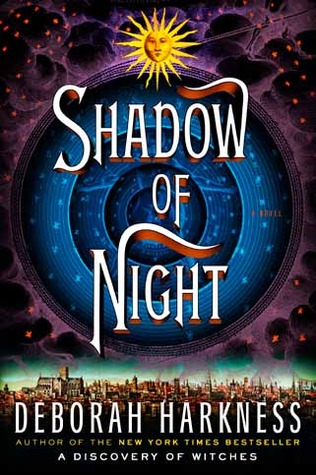
Paperback Release Event & Giveaway: Shadow of Night by Deborah Harkness

Today marks the paperback release of Deborah Harkness' second book in the All Souls Trilogy, Shadow of Night! This is one of my favorite book series of all time, so if you haven't read it yet - you definitely should!! In celebration of this event, I have a Q & A with the author as well as a giveaway provided by the publisher! Read on and then enter to win a copy of the book!

Also, the publisher would like to invite you to join Harkness and her editor Carole DeSanti, the author of The Unruly Passions of Eugénie R, for a virtual book event on BookTalk Nation on June 4th at 2pm EST.  Fans can join by phone and buy personalized copies of the book by ordering online here


Shadow of Night (All Souls Trilogy #2)
Author: Deborah Harkness
Genre: Fantasy/Paranormal/Romance
Paperback Release Date: May 28, 2013
Publisher: Viking Adult

Buy Links: Amazon / Barnes and Noble

Description:

IT BEGAN WITH A DISCOVERY OF WITCHES.

Historian Diana Bishop, descended from a line of powerful witches, and long-lived vampire Matthew Clairmont have broken the laws dividing creatures. When Diana discovered a significant alchemical manuscript in the Bodleian Library,she sparked a struggle in which she became bound to Matthew. Now the fragile coexistence of witches, daemons, vampires and humans is dangerously threatened.

Seeking safety, Diana and Matthew travel back in time to London, 1590. But they soon realise that the past may not provide a haven. Reclaiming his former identity as poet and spy for Queen Elizabeth, the vampire falls back in with a group of radicals known as the School of Night. Many are unruly daemons, the creative minds of the age, including playwright Christopher Marlowe and mathematician Thomas Harriot.

Together Matthew and Diana scour Tudor London for the elusive manuscript Ashmole 782, and search for the witch who will teach Diana how to control her remarkable powers...


Q: A Discovery of Witches debuted at # 2 on the New York Times bestseller list with publications following in 37 countries.  What has been your reaction to the outpouring of love for A Discovery of Witches? Was it surprising how taken fans were with Diana and Matthew’s story?


A. It has been amazing—and a bit overwhelming. I was surprised by how quickly readers embraced two central characters who challenge our typical notion of what a heroine or hero should be. And I continue to be amazed whenever a new reader pops up, whether one in the US or somewhere like Finland or Japan—to tell me how much they enjoyed being caught up in Diana’s world.


Q:  Last summer, Warner Brothers acquired screen rights to the trilogy, and David Auburn, the Pulitzer-Prize-winning writer of Proof, has been tapped to pen the screenplay. Are you looking forward to your novels being portrayed on the big screen?  What are your favorite casting ideas that you’ve heard from friends and readers?


A. I was thrilled when Warner Brothers wanted to translate the All Souls trilogy from book to screen. At first I was reluctant about the whole idea of a movie, and it actually took me nearly two years to agree to let someone try. The team at Warner Brothers impressed me with their seriousness about the project and their commitment to the characters and story I was trying to tell. Their decision to go with David Auburn confirmed that my faith in them was not misplaced. As for the casting, I deliberately don’t say anything about that! I would hate for any actor or actress to be cast in one of these roles and feel that they didn’t have my total support. I will say, however, that many of my readers’ ideas involve actors who have already played a vampire and I would be very surprised if one of them were asked to be Matthew!


Q: SHADOW OF NIGHT opens on a scene in 1590s Elizabethan England featuring the famous School of Night, a group of historical figures believed to be friends, including Sir Walter Raleigh and playwright Christopher Marlowe.  Why did you choose to feature these individuals, and can we expect Diana and Matthew to meet other famous figures from the past?  


A. I wrote my master’s thesis on the imagery surrounding Elizabeth I during the last two decades of her reign. One of my main sources was the poem The Shadow of Night by George Chapman—a member of this circle of fascinating men—and that work is dedicated to a mysterious poet named Matthew Roydon about whom we know very little. When I was first thinking about how vampires moved in the world (and this was way back in the autumn of 2008 when I was just beginning A Discovery of Witches) I remembered Roydon and thought “that is the kind of identity a vampire would have, surrounded by interesting people but not the center of the action.” From that moment on I knew the second part of Diana and Matthew’s story would take place among the School of Night. And from a character standpoint, Walter Raleigh, Christopher Marlowe, George Chapman, and the other men associated with the group are irresistible. They were such significant, colorful presences in Elizabethan England.


Q: In SHADOW OF NIGHT, we learn more about the alchemical bonds between Diana and Matthew.   In your day job, you are a professor of history and science at the University of Southern California and have focused on alchemy in your research.  What aspects of this intersection between science and magic do you hope readers will pick up on while reading SHADOW OF NIGHT?


A. Whereas A Discovery of Witches focused on the literature and symbolism of alchemy, in Shadow of Night I’m able to explore some of the hands-on aspects of this ancient tradition. There is still plenty of symbolism for Diana to think about, but in this volume we go from abstractions and ideals to real transformation and change—which was always my intention with the series. Just as we get to know more about how Elizabethan men and women undertook alchemical experiments, we also get to see Matthew and Diana’s relationship undergo the metamorphosis from new love to something more.


Q: SHADOW OF NIGHT spans the globe, with London, France, and Prague as some of the locales. Did you travel to these destinations for your research?  


A. I did. My historical research has been based in London for some time now, so I’ve spent long stretches of time living in the City of London—the oldest part of the metropolis—but I had never been to the Auvergne or Prague. I visited both places while writing the book, and in both cases it was a bit like traveling in time to walk village lanes, old pilgrim roads, and twisting city streets while imagining Diana and Matthew at my side.
Q: Did you have an idea or an outline for SHADOW OF NIGHT when you were writing A Discovery of Witches?  Did the direction change once you sat down to write it?


A. I didn’t outline either book in the traditional sense. In both cases I knew what some of the high points were and how the plot moved towards the conclusion, but there were some significant changes during the revision process. This was especially true for SHADOW OF NIGHT, although most of those changes involved moving specific pieces of the plot forward or back to improve the momentum and flow.


Q: A Discovery of Witches begins with Diana Bishop stumbling across a lost, enchanted manuscript called Ashmole 782 in Oxford’s Bodleian Library, whose secrets Diana and Matthew are still trying to uncover in SHADOW OF NIGHT. You had a similar experience while you were completing your dissertation.  What was the story behind your discovery?  And how did it inspire the creation of these novels?


A. I did discover a manuscript—not an enchanted one, alas—in the Bodleian Library. It was a manuscript owned by Queen Elizabeth’s astrologer, the mathematician and alchemist John Dee. In the 1570s and 1580s he became interested in using a crystal ball to talk to angels. The angels gave him all kinds of instructions on how to manage his life at home, his work—they even told him to pack up his family and belongings and go to far-away Poland and Prague. In the conversations, Dee asked the angels about a mysterious book in his library called “the Book of Soyga” or “Aldaraia.” No one had ever been able to find it, even though many of Dee’s other books survive in libraries throughout the world. In the summer of 1994 I was spending time in Oxford between finishing my doctorate and starting my first job. It was a wonderfully creative time, since I had no deadlines to worry about and my dissertation on Dee’s angel conversations was complete. As with most discoveries, this discovery of a “lost” manuscript was entirely accidental. I was looking for something else in the Bodleian’s catalogue and in the upper corner of the page was a reference to a book called “Aldaraia.” I knew it couldn’t be Dee’s book, but I called it up anyway. And it turned out it WAS the book (or at least a copy of it). With the help of the Bodleian’s Keeper of Rare Books, I located another copy in the British Library.


Q: Are there other lost books like this in the world?


A. Absolutely! Entire books have been written about famous lost volumes—including works by Plato, Aristotle, and Shakespeare to name just a few. Libraries are full of such treasures, some of them unrecognized and others simply misfiled or mislabeled. And we find lost books outside of libraries, too. In January 2006, a completely unknown manuscript belonging to one of the 17th century’s most prominent scientists, Robert Hooke, was discovered when someone was having the contents of their house valued for auction. The manuscript included minutes of early Royal Society meetings that we presumed were lost forever.


Q: Unlike Twilight’s Bella and Edward—hormonal teenagers who meet in the halls of a high school—your leading characters Matthew and Diana are established academics who meet in the library of one of the most prestigious academic institutions in the world.  This is a world where vampires and witches drink wine together, practice yoga and discuss philosophy.   Are these characters based on something you found missing in the fantasy genre?

A. There are a lot of adults reading young adult books, and for good reason. Authors who specialize in the young adult market are writing original, compelling stories that can make even the most cynical grownups believe in magic. In writing A DISCOVERY OF WITCHES, I wanted to give adult readers a world no less magical, no less surprising and delightful, but one that included grown-up concerns and activities. These are not your children’s vampires and witches. 
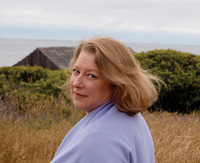


My life has been a series of left turns that nevertheless took me in the right direction (though it didn't always seem so at the time). I went to college to be a theater major and ended up studying the Renaissance. I went to grad school to become a college administrator and loved to teach so much I became a college professor instead. I thought I wanted to be a Tudor-Stuart historian, and found myself a historian of science. I started blogging because a friend needed help on a project in 2006 and am still blogging about wine today. I started writing a novel in the fall of 2008, and it became a New York Times Bestseller in February 2011: A DISCOVERY OF WITCHES. The second volume in the All Souls Trilogy, SHADOW OF NIGHT, came out in July 2012 and debuted at #1 on the NEW YORK TIMES Bestseller's List. What's next? The final volume of the trilogy, of course. We don't have a release date yet, but when we do it will be posted here. (Taken from Goodreads)

Author Links:
Website
Twitter
Facebook
Giveaway: (1) Paperback copy of SHADOW OF NIGHT + alchemical buttons - US only!